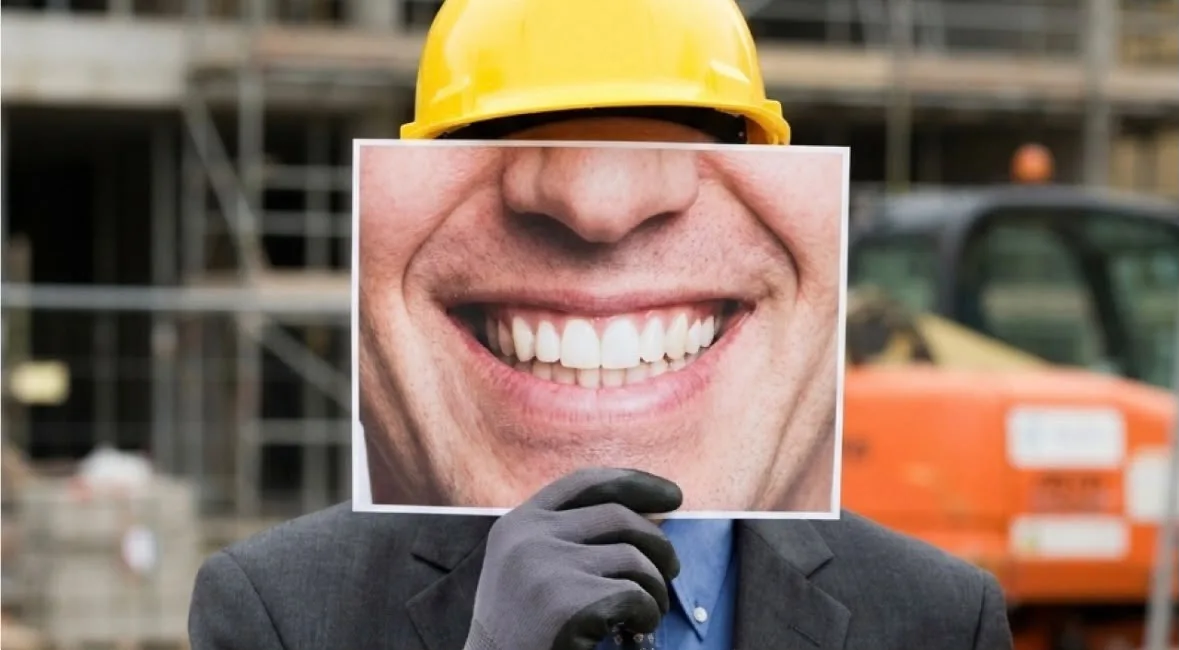
Modern Engineers Smile and Wear Suits. And Oftentimes Use Lipstick.
The suit isn't about changing who engineers are. It's about what happens when the engineer finally has to walk into the room and explain what they built.

Before you close this article in outrage, hear me out.
This is not about gender. This is not about dress codes. This is an ironical metaphor about the most important shift happening in engineering right now. And if you are a software engineer reading this, I am not here to offend you. I am here to tell you something your engineering degree never did.
The rules changed. And the engineers who adapt will be the ones who matter.
Why the suit became the metaphor.
Not that long ago, the engineering world had a very clear structure. Business stakeholders spoke to product managers. Product managers spoke to business analysts. Business analysts translated everything into specifications. Specifications landed on the engineer's desk. The engineer coded. The work went back up the chain. Repeat.
The engineer never had to explain anything to anyone who was not an engineer. That was the whole point of the intermediaries. They were the translators between two worlds that were never expected to meet.
AI removed the translators.
Not immediately. Not completely. But the space between the engineer and the actual consumer of the product they are building is narrowing faster than most engineering teams are prepared for. And with that narrowing comes a responsibility that nobody put in the job description.
The engineer now needs to walk into the room, understand the problem from a non-engineering perspective, translate it into a technical brief, instruct AI to execute it, verify the output, and then walk back into that same room and explain what was built to people who have never written a single line of code.
That is the suit. That is the smile. That is the lipstick if you want to trigger a reaction.
The math that changes everything.
Here is the part nobody is saying clearly enough.
AI does not just change how engineers work. It changes how much they have to explain.
If AI increases your engineering output by twenty times, you now have twenty times more decisions to justify, twenty times more solutions to present, and twenty times more conversations to have with people who are not engineers. The output multiplied. The communication requirement multiplied with it.
The engineer who produces one feature per week has one conversation to navigate.
The engineer who produces twenty features per week with AI has twenty.
Communication is not a soft skill anymore. It is the bottleneck. And the engineer who cannot articulate their thinking clearly will become the most expensive person in the room, not because of what they build, but because of what they cannot explain.
The trap the smartest engineers fall into.
Some of the smartest people I know have the hardest time explaining what they know.
Not because they are arrogant. Because they are deep. The deeper you go into a subject, the easier it is to assume that everyone around you understands what you understand. Engineers who live and breathe a specific problem domain make unconscious assumptions about the baseline of the people they are speaking to. They use the language of their world with people who live in a completely different one.
They talk fast because they think fast. They skip steps because the steps are obvious to them. They use terminology that is second nature to them and completely foreign to the person sitting across the table.
And historically, people hate things they do not understand.
That is not the client's failure. That is the engineer's responsibility.
It is not the CFO's job to learn to think like a CTO. It is the CTO's job to speak in a way the CFO can act on. It is not the investor's job to understand the architecture. It is the engineer's job to make the architecture make sense to someone who has never seen a line of code.
Explain it like you are explaining it to a second grade kid. Not because the person is not intelligent. Because they are intelligent in a completely different domain and they deserve to understand what you built for them.
The risk nobody wants to say out loud.
Yes. There is a risk in asking engineers to become more business facing.
Engineers take special pride in their work. That pride is what drives them to solve complex problems at the level they do. Ask them to step out of that world and into a room full of non-technical people and some of them will feel exposed. Some will feel undervalued. Some will feel like the craft is being reduced to a presentation.
I understand that. I am an engineer by degree.
But here is the truth I am willing to say even if it generates hate in the comments.
A solution you cannot explain is a solution that will not survive the room it needs to survive.
You can have the most elegant architecture in the history of software engineering. If you cannot communicate its value to the person funding it, the person buying it, or the person deciding whether to scale it, it will not matter. Not because the work was not great. Because nobody understood it well enough to fight for it.
The suit is not a compromise of the craft. It is the craft's best advocate.
What the modern engineer actually looks like.
The modern engineer extracts the problem from the person who has it. Asks the questions that uncover what is actually needed, not just what was requested. Instructs AI with precision. Verifies the output with judgment. Presents the solution with clarity.
They are closer to a product manager amplified by technology than the engineer behind the screen the industry was built around.
That transition is not comfortable. Growth never is.
But here is what I know from experience. The smile is learned through tears. You learn to present yourself at your best even when things are hard, even when the solution is being questioned, even when someone tells you what you built is not good enough and you know they simply do not understand it yet.
The right response to that moment is not frustration. It is a smile and a question.
Thank you for the feedback. What is the thing you feel you did not understand?
Because it is not possible for a great solution to simply be bad. It is only possible for it to be explained badly.
That is the suit. That is the smile. That is the most important upgrade a software engineer can make in the era of AI.
And I cannot wait for the comments.